The Lombardy case: epicenter of factory farming in Italy
Stopping the expansion of factory faming and starting an agroecological transition is not a niche battle: it is an essential condition for protecting the environment, health, and the very future of agriculture.
A new report (in Italian) by Està, in collaboration with Terra!, Legambiente Lombardia, and Essere Animali, analyses the environmental, social and economic impact of the over 5.2 million cattle and pigs raised in the region of Lombardy, known for having livestock densities among the highest in Europe.
The Lombardy case
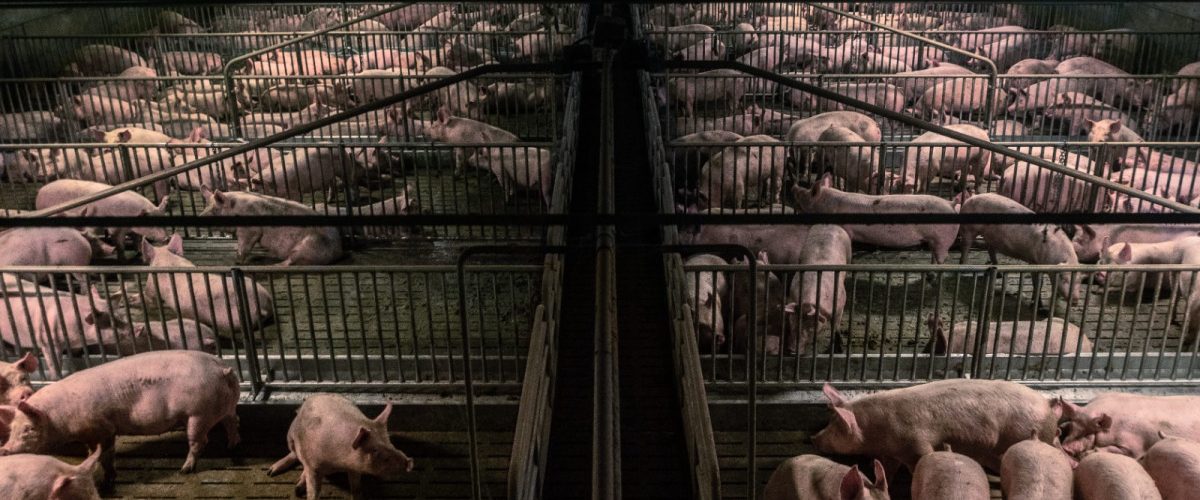
Lombardy is the region in Italy with the highest number of cattle and pigs, respectively 28.44% and 47.23% of all cattle and pigs raised in Italy. Practically one for every two inhabitants.
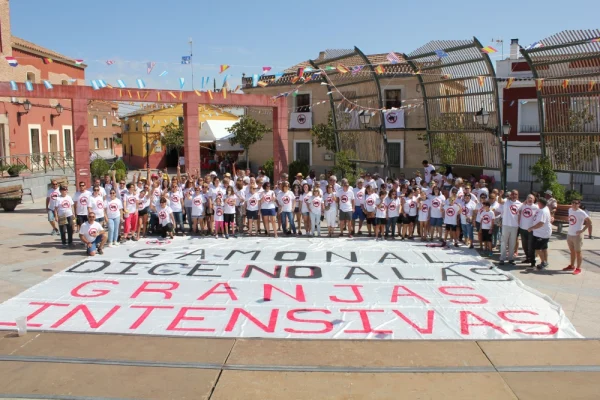
In the 8.500 inhabitants city of Gonzaga (Mantua), there are nearly 60,000 cattle and pigs – over 7 animals per resident and 1,198 head per km²
In the Lower Lombardy area, this situation leads to the release of extreme quantities of gaseous ammonia, one of the main precursors in the formation of ultrafine particules in the air (PM2.5). In Soresina (Cremona), PM2.5 limit is breached more than 40 days per year.
Soil and air pollution
This concentration of animals – which for cattle corresponds to four times the national average, and six times for pigs – unloads too high levels of nitrogen in the soil, left unable to absorb livestock manure as a natural fertilizer. The spreading of manure, which once represented a good fertilization practice, in current quantities risks compromising soil and air health, and is already exposing Italy to European sanctions for violation of the Nitrates Directive.
The report also shows how the lack of rules on animal density limits allows uncontrolled expansions, with increasing risks for people’s health risks and landscapes reduced to corn monocultures.
Lombardy is also one of the most critical regions for air pollution: the combination of traffic, industrial activities, and intensive animal production creates a “cocktail” of emissions that makes it more difficult to meet European air quality limits. In this context, reducing the livestock load and overcoming the intensive agriculture model is not just an environmental issue but a necessary health prevention measure, especially in closed plains like the Po Valley, where pollutants accumulate easily.
A model that devours land, climate, and health
Today, about 70% of European agricultural land is used to produce feed and forage for animals, not direct food for people. It means that huge areas are occupied by corn, soy, forage cereals, and pastures in service of an increasingly concentrated and intensive livestock system, with a massive impact on land use, water, and biodiversity.
Intensive agriculture is also one of the main drivers of the climate crisis and air pollution: in Italy, it is responsible for about two-thirds of ammonia emissions, contributing to the formation of fine particulate matter (PM2.5), which is very harmful to human health. Each year, approximately 50,000 premature deaths are attributable to fine particulate matter. Reducing dependence on this model is not only a climate policy measure, but also a public health measure, necessary to meet European targets on ammonia and PM2.5 emissions.
Concentration and disappearance of smaller farms
The current system of subsidies and rules incentivizes the growth of increasingly large and intensive operations, while smaller, more diversified farms struggle to survive. A significant portion of Common Agricultural Policy (CAP) funds, tied to farm size and number of livestock raised, goes to a small group of large operators, leaving “crumbs” for smaller farms. When those actually represent the overwhelming majority – 80% of the national total.
This concentration means fewer farms, less employment in rural areas, less variety of breeds and crops, more homogeneous landscapes, and greater vulnerability to climate and market shocks. The paradox is that the most resilient systems – mixed farms, with rotations, grazing, crop-livestock integration – are precisely those least rewarded by the current economic and regulatory model.
Concentration and biodiversity loss
Even in Lombardy, the intensive model is changing agricultural geography: the total number of farms decreases, while the average size of the remaining barns increases. Small and medium-sized farms, often with mixed livestock, pastures, rotations, and greater attention to crop diversification, struggle to compete with large-scale operations that can capture a large share of subsidies.
This dynamic leads to the disappearance of family farms that steward the territory and maintain more varied landscapes, with permanent meadows, hedges, tree rows, and small crops that provide habitat for pollinating insects, birds, and wildlife. Replacing these systems with large corn platforms and confined barns increases the region’s vulnerability to both climate shocks (drought, heatwaves) and market shocks (such as the recent collapse in milk prices).
Gonzaga and the battle to protect the local agricultural identity
Last November, the municipality approved a regulation to safeguard more traditional local farming and the territory, limiting new authorizations for intensive production, but the Lombardy Region appealed the regulation. The Region is choosing to protect the intensive industrial model over more virtuous local initiatives.
The new report denounces this “institutional show of force,” emphasizing that Lombardy hosts an excessive number of animals, largely confined in sheds, with a model that devastates the environment, climate, and public health, and forces small farms to close.
In this context, an agroecological transition of the sector would have strategic value: it would mean guiding farms away from the “landless” model, where animals depend on imported feed and external inputs, towards systems that link the number of head to available land, valorize grazing, and reduce the use of pesticides and chemical fertilizers. It would also mean rebalancing the distribution of public resources, rewarding those who maintain or restore agricultural and landscape biodiversity elements.
Why we need to abandon the factory farming model
To reverse course, we must stop the expansion of new intensive operations and plan for agroecological reconversion of livestock farming. The idea is simple: stop adding pressure to a system that is already unsustainable and start using public resources to change it, not to fuel its inefficiencies.
A change of direction is also a tool for economic justice: it prevents new industrial expansions that would further crush small farmers and rural areas, and opens political and financial space to support those who transition to a fairer, healthier and more caring farming model.
What agroecological transition means in livestock farming
An agroecological transition does not mean doing intensive production”a bit better,” but rethinking the role of animals in agricultural systems.
In practice, this means:
- reducing the total number of livestock raised, to lower emissions, feed needs, antibiotics, and pesticides;
- bringing animals back onto the land instead of keeping them relegated to concrete sheds, integrating grazing, crop rotations, and the use of by-products, instead of relying on imported feed (often a cause of deforestation);
- diversifying production, valorizing rustic breeds, short supply chains, and quality products linked to the territories.
This approach reduces pressure on the land (less corn and soy for feed, more food crops and permanent meadows rich in biodiversity), reduces the use of pesticides and chemical fertilizers, improves animal health, and also reduces the risk of massive antibiotic use and new health crises.
Rethinking policies and consumption
For this transition to happen, coherent policies are needed: shifting subsidies from the number of head and farm size towards environmental and social criteria, financing the reconversion of animal factories and guaranteeing a fair price for products from smaller and agroecological farms.
But a change in consumption is also needed: reducing overall meat and dairy production and consumption, favoring quality, origin, and farming methods, is an integral part of the solution. A way to free up land, water, and resources to produce more food, protect rural territories, and support farmers who choose a better approach towards the environment and communities.
Read the full report here or the executive summary here (both in Italian)