Nitrates in water
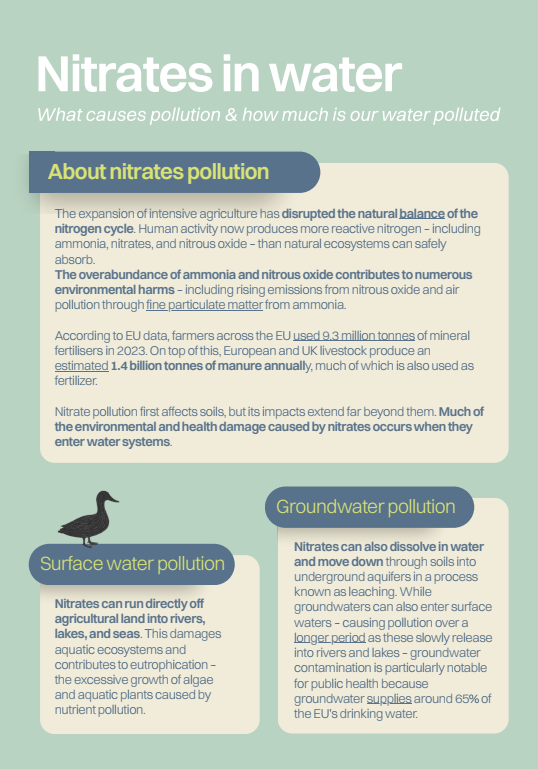
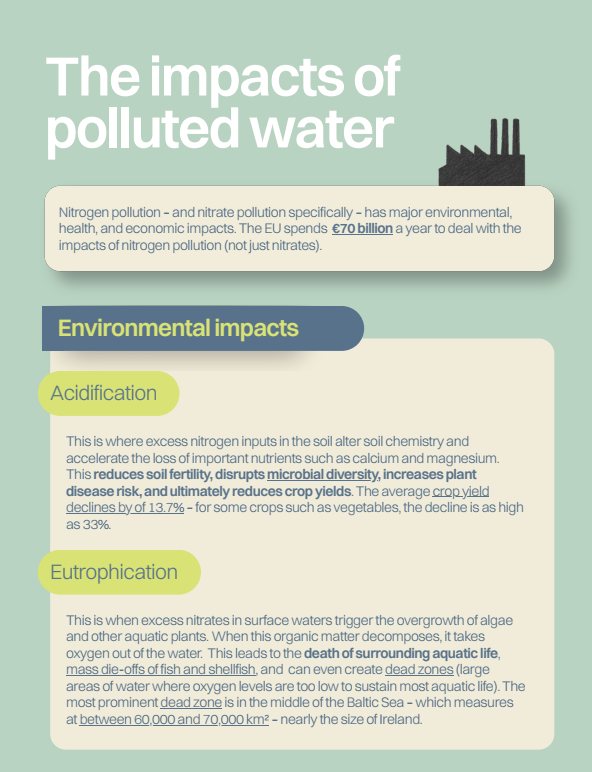
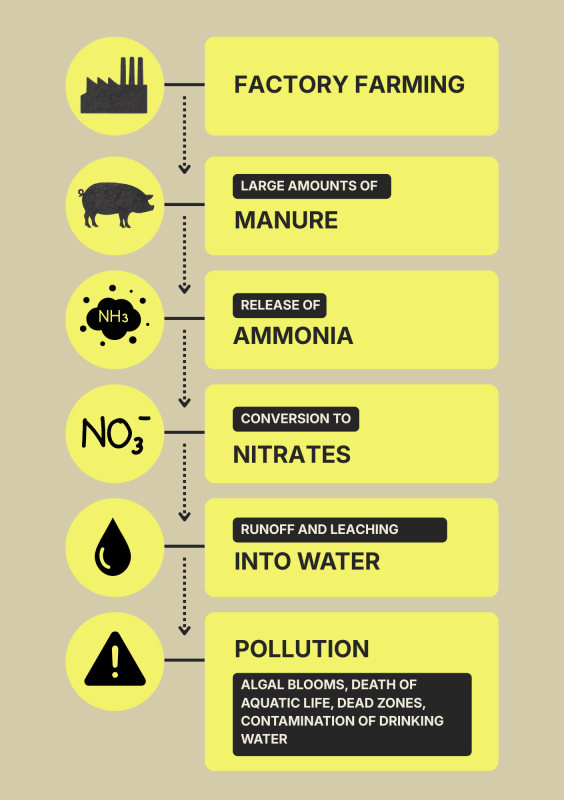
Animal manure has always been used as a fertiliser on cropland and grazing fields, but animal factories produce more manure than nearby fields can absorb, from where it runs into rivers and other water supplies. European and UK livestock produce an estimated 1.4 billion tonnes of manure annually.
With local communities left to bear the harmful consequences of this industrial meat production taking over the countryside. The excessive nitrate and ammonia waste from animal factories has left several million people in Europe drinking polluted water and increases the risk of outbreaks of waterborne diseases.
Manure contains nitrogen compounds. As it decomposes, it releases around 400 harmful gases, including ammonia from this nitrogen. That gas can evaporate into the atmosphere and be deposited back onto land and water. In the UK, agriculture is responsible for 87% of total ammonia emissions and livestock is the primary source.
Through a process called nitrification, naturally occurring bacteria in soil and water convert ammonia into nitrates. When manure, or nitrogen-rich fertilisers, are applied to fields, rainfall will wash nitrates into surface water like rivers, lakes and seas (runoff), and carry them down through soil into groundwater (leaching).
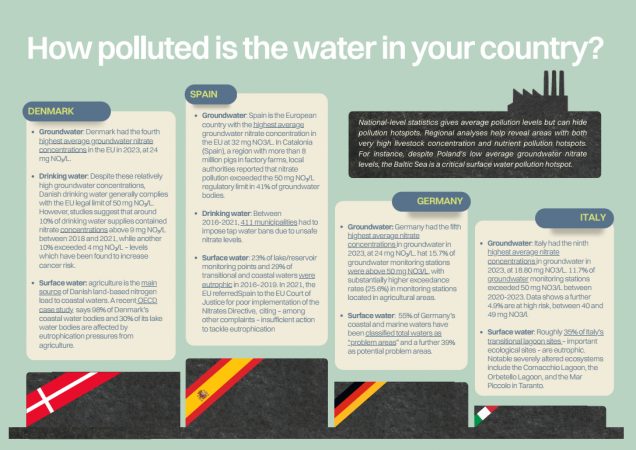
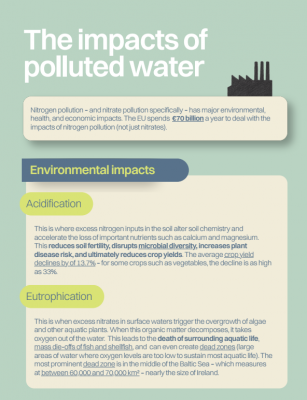
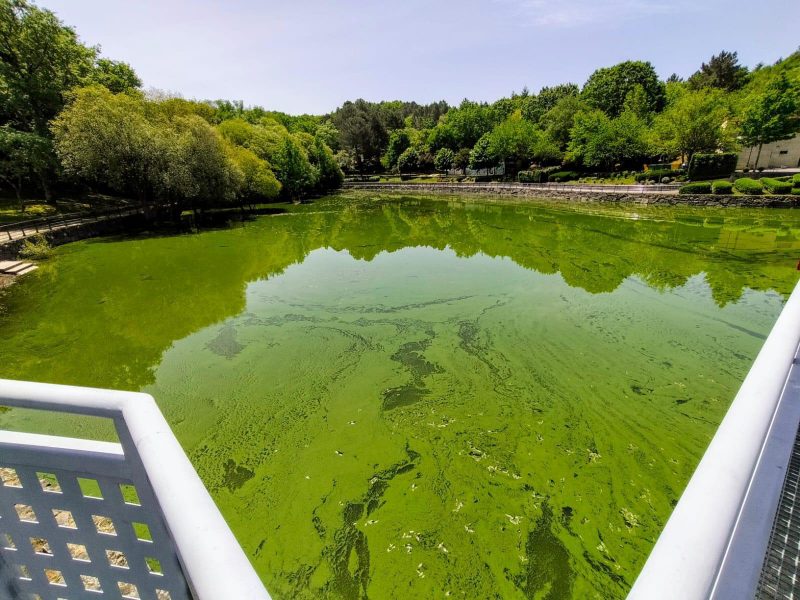
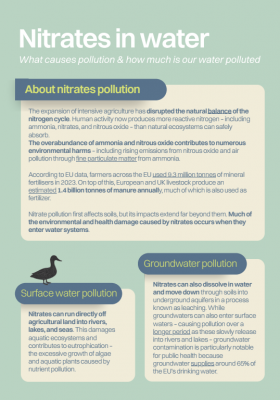
High levels of nitrates in water not only cause disruption and heavy damage to aquatic ecosystems (i.e. the excessive growth of algae, or eutrophication), it also contaminate drinking water sources. The countries with the highest average nitrate concentrations in groundwater in 2023 were Spain (32 mg/L), Belgium (30 mg/L), Bulgaria (29 mg/L), Denmark (24 mg/L) and Germany (22 mg/L).
Early July 2026, the European Commission will present its Strategy for the future of livestock, as part of its broader Vision for Agriculture and Food. One goal is to build a strategy that fits the already existing pieces of legislation relevant to animal farming, including those related to nitrate levels:
These directives regulate nitrate pollution from fertiliser and manure runoff by setting limits to what is allowed in waterways.
The Water Framework Directive (WFD) also regulates water pollution from pesticides runoff and bacteria such as e-coli, which can come from farms too. It additionally rules the sourcing of water, which is particularly relevant in countries such as Spain where animal production is aggravating water shortages.
However, despite the ever growing damage caused by industrial animal production to water, animal welfare, and local communities, we do not expect the EU Commission’s strategy to seriously confront the the drivers of factory farming, or meaningfully tackle the sector’s major health, social and environmental impacts.
If the European Commission chooses to downplay the drivers of factory farming, and the sector’s major health, social and environmental impacts, we are not.
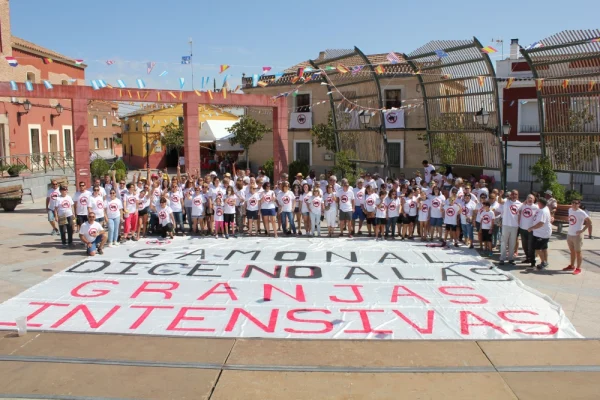
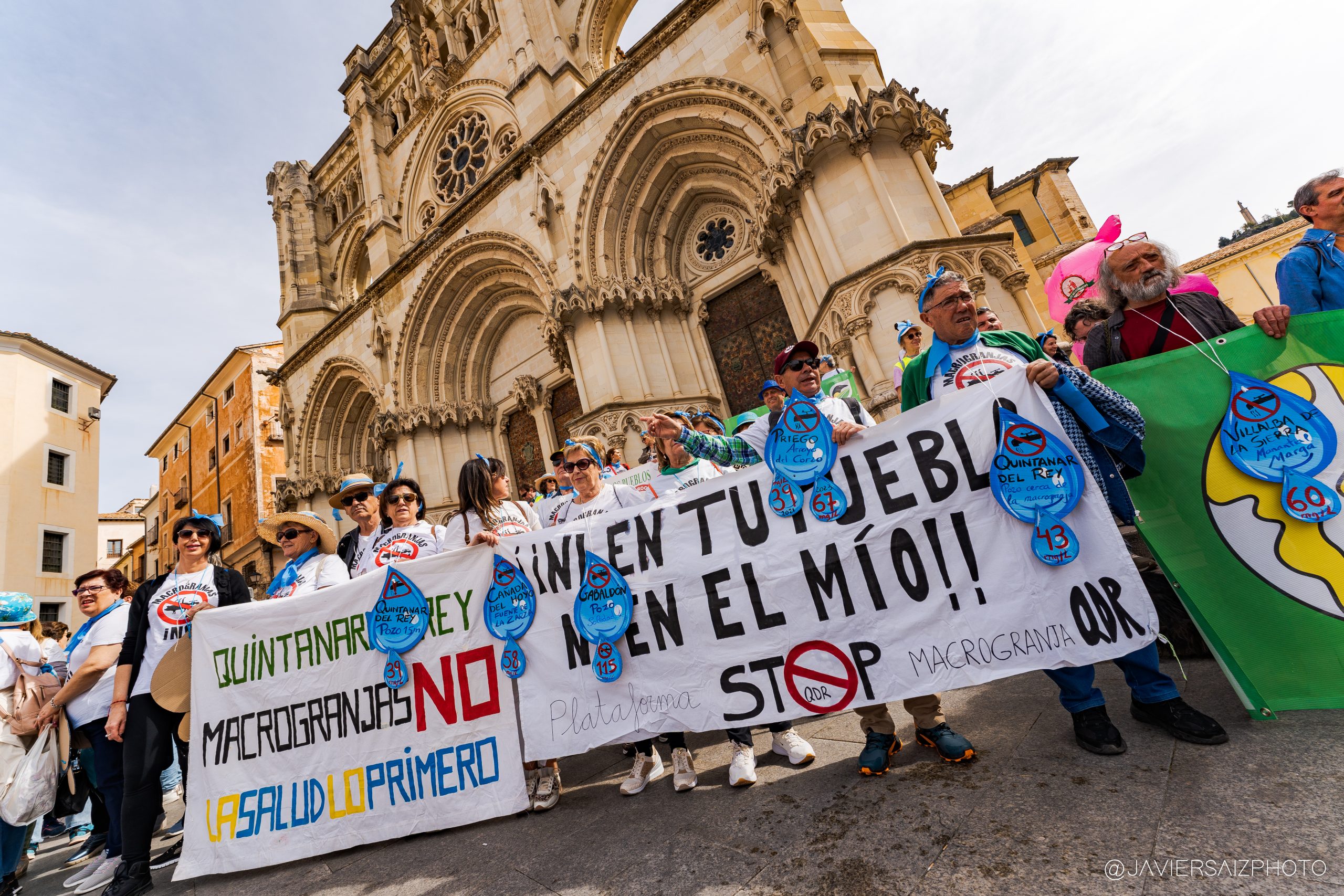
To shed light on the pollution of groundwater and surface water across Europe, grassroots groups will test sites located close to their homes and confront authorities with the results.
Why? We want to show that statistics are not just a number in a hidden paper, but have real implications and affect the lives of many people in many European countries – from Poland and Germany, to Italy and Spain, Hungary and Croatia.